Many aspects contribute to whether you’ll be hooked on a new open-world role-playing game for hundreds of hours or bounce off after the first few. Besides the obvious graphics, story, characters, world, and quests, progression systems shouldn’t be underestimated. For some players, intricate weapon systems can add another meaningful layer to chase and keep them additionally invested. Character progression can be another factor that separates the urge to keep leveling in an open world from a meaningless level number that barely changes how the core gameplay feels.
For the games below, it’s not just about deep character progression. That can be achieved in various ways, from good class or equipment systems to the popular learn-by-doing approach. Instead, each game below offers an actual skill tree or branching perk-grid structure that’s satisfying to explore and invest in over long-term play. Moreover, we’ll prioritize skill trees that give you noticeably different abilities and can result in creative, diverse builds—not merely those increasing your stats through boring numbers.
Assassin’s Creed Shadows
Two Characters With Distinct Skill Trees Tied To Each Weapon Type
-
 Image via Ubisoft
 -
 Image via Ubisoft
 -
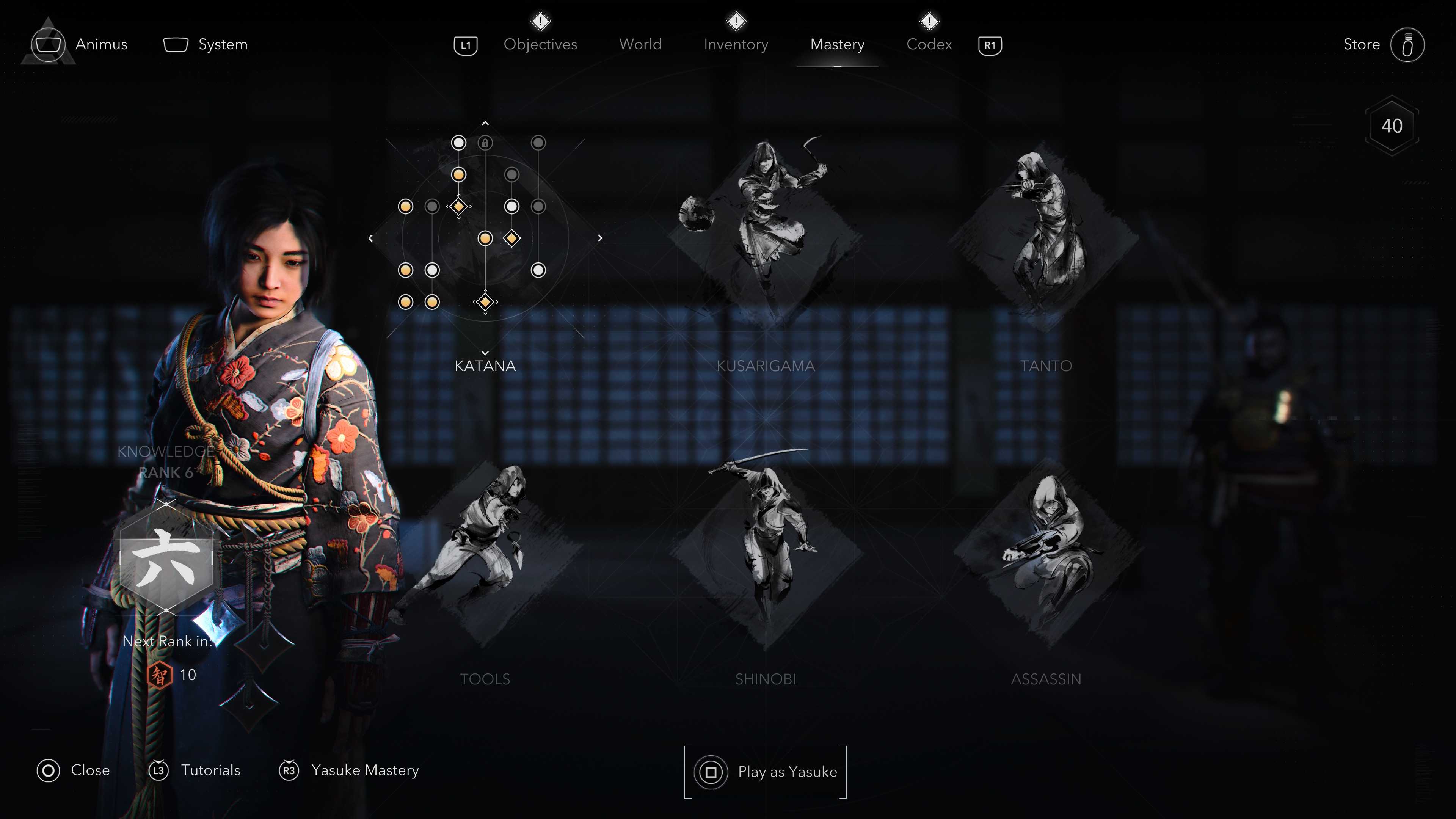
While its reputation remains divisive, for its genre, Assassin’s Creed Shadows actually did many things extremely well. The risky concept of separating the samurai warrior and agile shinobi archetypes between Yasuke and Naoe worked better than sticking with a single middling protagonist, and the game’s progression and gear systems offer enough depth, variety, and impact to experiment with for hours on end. Moreover, the game separates regular experience-based leveling from Knowledge progression, resulting in more layered advancement and the need to chase specific side activities to grow.
Both Naoe and Yasuke in AC Shadows can wield different weapon types, and their multiple skill trees are built to reflect that. Simple, clean, and effective, you can prioritize general aspects like Naoe’s stealth and Yasuke’s samurai training, as well as focus on your primary weapon choice, unlocking and improving useful perks or choosing between several active skills with unique animations and effects. Everything can then be enhanced and further altered for the best synergies with your weapon perks and engravings. Better yet, Mastery nodes can be reset at any time, making experimentation with different approaches painless.
The final layer is the game’s Knowledge tree, which lets you invest further in passive abilities later on. While this is easily the least impactful progression system of the bunch, it tightens up your earlier chosen path for an even stronger build identity.
Diablo 4
A Weak Start Evolves Into Something Much More Impressive
-
 Image via Blizzard
 -
-
 Image via Blizzard
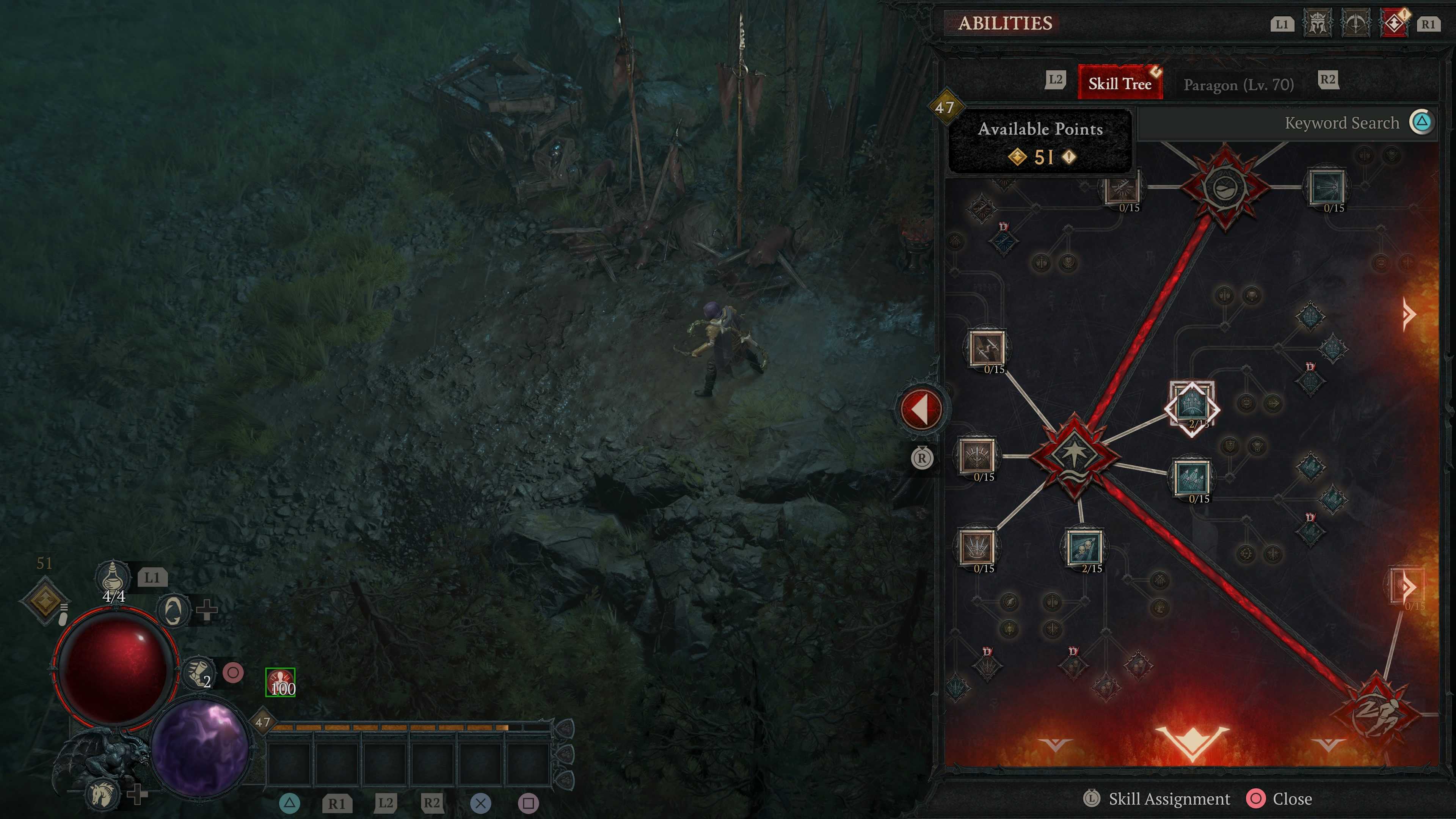
Unlike AC Shadows, where you get just two “classes” with different build branches, Diablo 4 expands that number to eight as of this writing, and each class comes with a dedicated and original skill tree to gradually master. Following the main path, you decide which nodes and abilities to pick, as well as evolve or alter them in major ways through modifiers—an idea familiar from Diablo 3.
While it’s fair to say Diablo 4 took quite some time and plenty of fan feedback to substantially rework its initially half-baked progression and skill trees, the game finally approaches that satisfying balance between complex depth and accessible fun. The latest version moved further away from boring number-driven enhancements like +15% skill damage, with far more abilities and modifiers now capable of meaningfully changing how your build actually works.
The latest updates pushed each class’ progression to entirely new heights, allowing individual skills to be modified in more ways and resulting in far more possible combinations than before. Some can even change a skill’s entire category, like turning Fire into Frost or Bone into Blood, opening up completely new synergies with gear. Credit where it’s due: Diablo 4 might not reach the bar set by Path of Exile for sheer flexibility, but fans can finally build their favorite classes in ways that reflect their personal combat priorities. Even better, skill trees are still just one layer of the game’s much deeper stat engagement.
Kingdoms Of Amalur: Re-Reckoning
Still Remembered For Doing Leveling Extremely Well
Kingdoms of Amalur: Re-Reckoning is the type of open-world RPG that only seems to become more fondly remembered over time, especially in light of the upcoming Fable, as Amalur might be the closest thing out there to make waiting until February a bit more manageable. When it comes to character progression, the game lets you build your class freely rather than adopt an existing one, and its skill trees are a perfect example of that.
Three distinct combat trees (Might, Finesse, and Sorcery) provide plenty of free-form ways to mix different abilities however you see fit. This feeds directly into the game’s signature Destiny system, representing Reckoning’s continuously evolving class progression and rewarding both pure specialization and hybrid builds between all three major branches.
Like in many of the best open-world RPGs with rich character-building options, Kingdoms of Amalur’s most exciting nodes unlock distinct active abilities, new attacks, or meaningful combat perks rather than boring percentage additions to damage or character health. At the same time, investing points in any branch doesn’t just unlock new moves and tricks; it gradually shapes your character into a dedicated warrior, mage, or something entirely different once you start feeding another branch. The biggest issue in Kingdoms of Amalur: Re-Reckoning, though, is its less-than-perfect balance, with some abilities being vastly more useful than others.
Fit the 9 games into the grid.
Borderlands 4
Shape Each Vault Hunter Into Several Substantially Different Characters
Quite possibly the biggest entry in the series in almost every regard, Borderlands 4 features four Vault Hunters (and now an additional wild-card DLC one), but that’s just for starters. While previous entries already offered plenty of freedom within each class, Borderlands 4 pushes that concept further, with every Vault Hunter essentially capable of becoming three substantially different versions of the same character.
You could almost say there are 12 core playable archetypes among the four original Vault Hunters, determined by robust and varied skill trees built around three distinct Action Skills for each. These can be switched freely even without investing in their corresponding tree, while deeper investment unlocks more powerful ways to alter and specialize them. This makes the opening choice flexible while rewarding commitment later. Not to mention how Borderlands 4’s incredible gear and weapon systems further multiply all the possible combinations within a specific build.
For long-term progression in Borderlands 4, Specializations take the spotlight as an account-wide incremental tree for additional passive bonuses and further refinement—almost akin to the Mastery layer in AC Shadows. And DLC hunter C4SH also deserves a mention for deliberately breaking the familiar design with unpredictable, RNG-driven Action Skills and a different approach to customization.
Remains One Of The Most Natural Forms Of Classless Buildcrafting
After almost 15 years, The Elder Scrolls 5: Skyrim’s classless system and progression hardly surprise anymore, as its individual skill trees are far from the deepest among this open-world RPG selection. Nevertheless, the game remains one of the best examples of growing skills through your actions rather than simply investing abstract points, featuring a simple and elegant loop of using skills, improving them, specializing further, and gradually creating an emergent build identity based on your playstyle.
Skyrim’s skill-tree architecture, which features 18 independent skills, visually represented as separate constellations, is as iconic and simple as it gets, but there’s still plenty of layering and variety. Using a skill to level it is one thing; spending perk points to specialize further is another, but both are tightly connected. The cross-tree synergies from non-combat skills like Smithing, Alchemy, or Enchanting are arguably even more important than the complexity of any single branch.
This creates one of the most natural forms of classless buildcrafting in the genre, as you might not even know what your character will be most proficient in later on when you’re just starting the game, unless you already want to pursue a specific skill combination. Of course, Skyrim’s skills can be wildly uneven, with iconic OP builds like the notorious Stealth Archer or Illusion Assassin notably outperforming almost any other combination.
Tainted Grail: The Fall Of Avalon
Traditional Skill Trees At A Glance, Extremely Flexible For Creative Hybrids Later On
Tainted Grail: The Fall of Avalon is often compared to Skyrim, and while the game also features classless and flexible progression, its skill trees are far more nuanced. The game gives you vast freedom to create unusual hybrids, where skill investments, attributes, gear, and crafting all play a part in shaping a single build.
The Fall of Avalon offers six separate main skill trees, driven by core attributes like Strength, Spirituality, or Practicality. The most fun you’ll have in the game isn’t merely advancing one branch to its fullest, but figuring out what can be combined together. Tainted Grail is all about coming up with an extremely odd idea and then finding the tools to execute it. A bare-fisted alchemist-berserker can be perfectly viable, and so can a blacksmith-mage summoning undead. Lots of layers and systems can easily coexist within one character, even if the game doesn’t offer the largest number of nodes to learn.
Knowing the intricacies of Tainted Grail’s skill investments and their payoffs can become especially valuable in its unique Challenge Mode, where persistent debuffs force you to think harder about how your build works and how to suppress their nastiest effects. And the game’s Sanctuary of Sarras expansion shakes up progression once more, adding three new skill trees that can be switched around when needed, bringing yet another customization layer to an already deep progression system.

I’m Abhishek Sharma, an author at TigerJek.com. I enjoy exploring games, testing different strategies, and turning what I learn into clear, useful guides. My goal is to help players understand the game better and improve without the usual confusion.