The Marvel Cinematic Universe has always been built around long-term storytelling. A character can appear in one movie, casually mention something important, or show up in a post-credits scene, only for that seemingly minor detail to become significant years later. The Infinity Saga particularly rewarded audiences for paying attention, with characters, objects, and seemingly throwaway conversations eventually becoming essential parts of much larger stories. However, many teased plotlines in the MCU were not given the same treatment.
As MCU’s universe has expanded, several promising storylines have been left behind, sometimes after receiving substantial attention in a previous project. Some were intended to lead somewhere before the franchise changed directions, while others were introduced with enough potential that their disappearance feels like a real missed opportunity. Some abandoned storylines could have been great additions to the MCU if it had taken the time to explore them.
6
Peter Parker Became a Public Outcast
Spider-Man: Far From Home

Spider-Man: Far From Home ended with one of the biggest status-quo changes in Peter Parker’s MCU story. After Peter defeats Quentin Beck, Mysterio uses a final piece of footage to frame Spider-Man for his death before J. Jonah Jameson publicly reveals that Peter Parker is hiding behind the iconic superhero mask. For the first time in the MCU, Peter’s secret identity is no longer a secret.
It was an especially interesting direction, since the webslinger had struggled to balance his superhero persona with ordinary teenage life, and having his identity exposed could’ve forced him to deal with consequences of a completely different scale. Instead, in the opening minutes of Spider-Man: No Way Home, all legal charges against Peter are dismissed, and while his identity becoming public creates considerable chaos, the film’s focus quickly shifts to its multiversal story. No Way Home is nothing short of a great Spider-Man movie, but it bypasses one of the most intriguing consequences of Far From Home.
The charges being dropped so quickly and the consequences of the reveal being in the form of college rejection letters took away a very appealing scenario where Peter loses the safety net of his hidden identity, all the while facing the brunt of the public’s outrage. Peter doesn’t spend a movie dealing with being a publicly known superhero, and the MCU never explores what this set-up could’ve led to. No Way Home takes Peter somewhere much more dramatic, but a more grounded, personal story would’ve been great.
5
Tiamut’s Remains Could’ve Changed the MCU
Eternals

In 2021’s Eternals, Sersi transmutes the emerging Celestial Tiamut into stone, leaving a colossal marble corpse jutting out of the Indian Ocean. It was one of the most visually enormous unresolved elements of the MCU, creating what should’ve been an almost impossible event for the franchise to ignore. However, the planetary consequences and global fallout were left unaddressed across multiple Phase 4 projects, until the island was later referenced as an Adamantium mining site.
The setup had huge potential. A Celestial corpse suddenly appearing on Earth could’ve transformed international politics, scientific research, and the balance of power within the MCU. It also offered Marvel the perfect way to connect the events of Eternals to other characters who had never met the team. Instead, Tiamut remained largely absent from subsequent stories until Captain America: Brave New World eventually brought the remains back, using the site as a source of Adamantium.
As such, the Eternals tease hasn’t been entirely abandoned, but the storyline’s great potential was never truly explored. Relegating a cosmic deity to an ore while ignoring the aftermath of its descent was a haphazard fix, especially considering Tiamut could’ve been the foundation for an entire phase of interconnected stories. Years of silence and an underwhelming exploration meant this storyline was still a missed opportunity.
4
Bruce Banner and Hulk’s Conflict Could’ve Been a Storyline
Avengers: Infinity War

One of the most interesting character developments in Avengers: Infinity War is not actually about Thanos. It’s about Bruce Banner’s increasingly complicated relationship with the Hulk. After being defeated by Thanos, Hulk refuses to emerge for most of the movie, leaving Bruce Banner to fight in the mechanical armor Hulkbuster instead. Infinity War makes it clear this isn’t simply a physical problem: Banner and Hulk have fundamentally different ideas about how their shared body should be used.
That creates an obvious storyline for Avengers: Endgame. Banner needs to understand why Hulk refuses to help him, while Hulk has his own grievances after years of being used as a weapon. The writers even confirmed that they originally planned to resolve this conflict in Infinity War, with Banner and Hulk coming to a compromise, experimenting with gamma radiation, and becoming Smart Hulk during the Battle of Wakanda. That idea was moved to Endgame because it felt tonally wrong immediately before the Avengers’ devastating defeat, but they seemingly reached a resolution during the five-year gap off-screen.
Banner and Hulk have one of the best dynamics in the MCU, with their relationship featuring intense psychological clashes, tug-of-war, and trauma. The storyline had great potential to explore this inner turmoil, but it was ultimately abandoned and explained through off-screen events.
3
HYDRA Stole Pym Particles, & Nothing Came of It
Ant-Man

Ant-Man introduced a potentially terrifying piece of MCU technology and placed it into the hands of a dangerous organization. Darren Cross attempts to sell his Yellowjacket technology to Hydra, represented by former S.H.I.E.L.D. agent Mitchell Carson. Scott Lang and Hope van Dyne stop the sale of the suit, but Carson escapes with a vial of Cross’s replicated Pym Particle serum.
That detail is pretty strange now fans think about it; Hydra had spent decades trying to reproduce Hank Pym’s shrinking technology, and Ant-Man specifically establishes that the organization is willing to pay enormous sums of money to obtain it. The movie then gives Hydra exactly what it wanted, a sample of the technology, but the sequels Ant-Man and the Wasp and Ant-Man and the Wasp: Quantumania never referenced Carson or the stolen particles.
There was huge potential in this setup. Hydra could’ve developed miniature weapons, infiltrated secure facilities, or created its own generation of size-changing operatives. More importantly, it could’ve connected Ant-Man to the wider spy/espionage side of the MCU that had been established with The Winter Soldier. Instead, the plotline was abandoned, leaving Ant-Man’s most intriguing loose end without a meaningful payoff. The franchise moved away from corporate espionage and lingering Hydra factions to instead focus on Janet van Dyne, the Quantum Realm, and the introduction of Kang the Conqueror.
2
The Ebony Blade Was Supposed to Introduce the Black Knight
Eternals

Eternals ends with Dane Whitman discovering that his family possesses the Ebony Blade, a mystical weapon connected to his comic-book identity as the Black Knight. Just as Dane considers taking up the sword from an ancient chest, an off-screen voice warns him to be careful. That voice was later confirmed to be Mahershala Ali’s Blade, so it looked like the MCU was setting up two supernatural storylines, but following this tease, Dane Whitman did not appear in subsequent projects, and the two characters have not shared the screen.
The set-up seemed deliberate; Kit Harington had been cast as a major Marvel character, the Ebony Blade was introduced as a significant supernatural artifact, and Blade was positioned as someone who already knew what Dane was dealing with. The obvious, and most exciting, next step was to show Dane becoming the Black Knight, exploring how his new powers would fit into Marvel’s supernatural stories, but this still hasn’t happened. Dane was initially written out of the Blade movie to focus exclusively on the vampire-hunting character, but the film then got stuck in development hell.
The Ebony Blade still remains one of the MCU’s most conspicuous teases, and it’s a great shame. Blade and Whitman would have easily led into the Midnight Sons plotline, the confederation of monster-hunting, supernatural heroes. It could’ve served as a great bridge between Marvel’s traditional stories and its supernatural corners, but even now, one of the most exciting character introductions still remains stuck at the starting line.
1
Karl Mordo’s “Too Many Sorcerers” Scene
Doctor Strange
Few MCU post-credits scenes promised a more obvious sequel storyline than Mordo’s final appearance in Doctor Strange. After abandoning the Ancient One’s teachings, Karl Mordo begins hunting down other sorcerers, having concluded that there are too many magic users abusing their powers. He strips Jonathan Pangborn of his magical energy and announces his mission to eliminate sorcerers, and his final words position him as an antagonist to the magical community.
It could’ve been an excellent direction for Doctor Strange in the Multiverse of Madness. Rather than introducing an entirely new threat, the sequel could’ve seen Strange dealing with the consequences of his first movie while also confronting a former ally who now believes the hero represents everything wrong with sorcerers. Mordo’s ideology – genuinely believing he’s doing the right thing – would’ve been a compelling villain storyline. However, the Earth-616 version of Mordo is absent from the sequel, with his crusade mentioned only in passing.
Sam Raimi revealed that an early version of the film included a scene where Mordo confronted Wanda, who killed and beheaded him. It was ultimately deemed too slow for Multiverse of Madness’s beginning, but at least it would’ve explained where Mordo went. Even still, fans would have preferred if the MCU didn’t abandon this storyline, as Mordo offered a much more comprehensive and complex exploration of sorcery and the ethics of power.
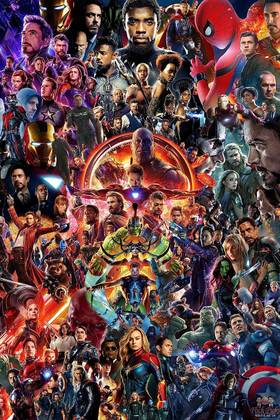
- First Film
-
Iron Man
- Latest Film
-
Marvels
- Cast
-
Robert Downey Jr., Chris Evans, Chris Hemsworth, Scarlett Johansson, Mark Ruffalo, Jeremy Renner, Chadwick Boseman, Zoe Saldana, Chris Pratt, Tom Hiddleston, Iman Vellani
- TV Show(s)
-
WandaVision, The Falcon and the Winter Soldier, Loki, Ms. Marvel, She-Hulk
- Movie(s)
-
Iron Man, Spider-Man: Homecoming, Captain America: Civil War, Avengers: Endgame, Shang-Chi and the Legend of the Ten Rings
- Character(s)
-
Iron Man, Captain America, Thor, Hulk, Black Widow, Hawkeye
The Marvel Cinematic Universe (MCU) is a sprawling movie and television franchise that weaves together individual stories of superheroes including Captain America, Thor, Spider-Man, Hulk, Black Widow, and many more. The first film in the franchise, Iron Man, was released in 2008. The MCU has garnered critical praise and financial success, earning billions at the box office and becoming a cultural phenomenon.

I’m Abhishek Sharma, an author at TigerJek.com. I enjoy exploring games, testing different strategies, and turning what I learn into clear, useful guides. My goal is to help players understand the game better and improve without the usual confusion.