Great ideas rarely exist in isolation, especially when it comes to fantasy. Even the most imaginative fictional worlds tend to borrow from those that came before them, taking familiar concepts and reshaping them into something that feels entirely new. As it turns out, Final Fantasy owes quite a bit of its identity to Star Wars, something longtime Square Enix developer Yoshinori Kitase recently discussed in an interview with IGN. But what makes his comments particularly interesting isn’t just how much Star Wars influenced Final Fantasy. It’s how that same creative exchange has continued across generations, with games like Clair Obscur: Expedition 33 demonstrating just how far a good idea can go when another creator takes it somewhere different.
As a major lover of both Star Wars and Final Fantasy, it is plain to see that Star Wars‘ footprints are tracked all throughout the RPG franchise, influencing narrative choices and characters that the gaming community has come to love. I am a firm believer that these types of worlds couldn’t exist without a little cross-pollination, a sharing of ideas that creates a foundation for fantasy. People, places, objects, and bodies of government in fantasy worlds are all different, but share a through line to one another because people have come to expect a certain vibe out of their fantasy worlds. These worlds are beyond our human comprehension, yes, but creatives are tasked with creating something both familiar and unique to grab audiences, which is not a small feat.
Building Fictional Worlds Like Final Fantasy Can Only Benefit from Pulling Inspiration from Other Fantasy Worlds
-
 Image via Square Enix
-
 Image via Square Enix
-
 Image via: Square Enix
On a large scale, Final Fantasy has many similarities to the behemoth that is Star Wars. It is easy to see that concepts for characters and plot points mirror those of Star Wars, some blatant, others less obvious. Both are fantasy stories with fantastical happenings, otherworldly powers, and villains so frightful with auras so big that people avoid saying their names if they can help it. Kitase has worked on a ton of Final Fantasy titles over the years, from Final Fantasy 6 to Final Fantasy 7 Revelation, which can only mean that there might be Star Wars-isms sprinkled throughout the franchise in one way or another.

Guess the games from the emojis.
This thought process doesn’t pertain to every Final Fantasy game, of course, but the signs are there for those with eyes to see. Some of Final Fantasy’s most memorable ideas originated with a very different kind of fantasy universe, and that’s part of what makes the series’ creative history so interesting. A broader concept that jumps out almost immediately is the idea of a small rebel group teaming up to take on a massive corporation, à la the original Star Wars trilogy with Luke Skywalker, Han Solo, Princess Leia, Chewbacca, and a few other friends along the way. To me, this is mirrored in the games team AVALANCHE as they fight to take down Shinra Inc. to stop them from draining the planet’s Mako.
-
 Image via Lucasfilm
-
 Image via Lucasfilm
-
 Image via Lucasfilm
Although not spearheaded by Kitase, Final Fantasy 12 is maybe one of the most stark examples of a Square Enix title mirroring Star Wars, down to character archetypes and narrative. This is not confirmed, but I’d like to believe that the similarities are pretty clear. Balthier is a Han Solo type with a flying ship called the Strahl and an alien-meets-animal sidekick a la Chewbacca named Fran. Vaan is an orphan who grew up in the desert and dreams of leaving his impoverished life to become something bigger, a la Luke or even Anakin. Princess Ashe is forced to flee after her kingdom fell under a tyrannical ruler following the Archadian invasion and goes into hiding as a resistance fighter under the alias Amalia, much like Princess Leia. There is a fight going on between the Archadian and Rozarria Empires, and a power struggle ensues that mirrors the war between the dark and light sides of the Force.
On a large scale, Final Fantasy has many similarities to the behemoth that is Star Wars.
This conflict also manifests in political matters, as well as battles like the Sky Fortress Bahamut dungeon, which results in Balthier, Fran, and the party exploiting the fortress’s weakness to destroy it after taking out Lord Vayne Solidor, similar to the Death Star. FF12 is, however, more nuanced than the fight between “good” and “evil,” with a focus on morally gray geopolitics and characters with subtle motivations rather than overtly good or evil ideas. On a not-so-subtle note, recurring characters Biggs and Wedge are rebel resistance fighters named directly after Luke’s Red Squadron wingmen. In his IGN interview, Kitase remarked,
Actually, something that I used as an inspiration inside the game was the name of a character in Final Fantasy VI. I wasn’t sure about the name I was going to use for those characters. And I ended up using the names of characters from Star Wars, [Biggs and Wedge]. I ended up using [those names] as an homage to Star Wars.
Final Fantasy 10‘s Blitzball is also oddly familiar. The sport combines a few real-world sports, like rugby, water polo, and soccer, and it serves as a cultural pastime for the folks of Spira. While the concepts of both sports are vastly different, this is also an overt reference to pod racing, according to Kitase, drawing direct inspiration from the pod racing sequence in Star Wars Episode I: The Phantom Menace. In his interview with IGN, Kitase said, “One more thing that came to my mind is from Final Fantasy 10, where I had to create [Blitzball] for the game inside the fantasy setting. And I used an idea from Star Wars Episode 1, where there’s this [pod] race and the fact of using sport inside a fantasy context. I took this idea directly from Star Wars.”
-
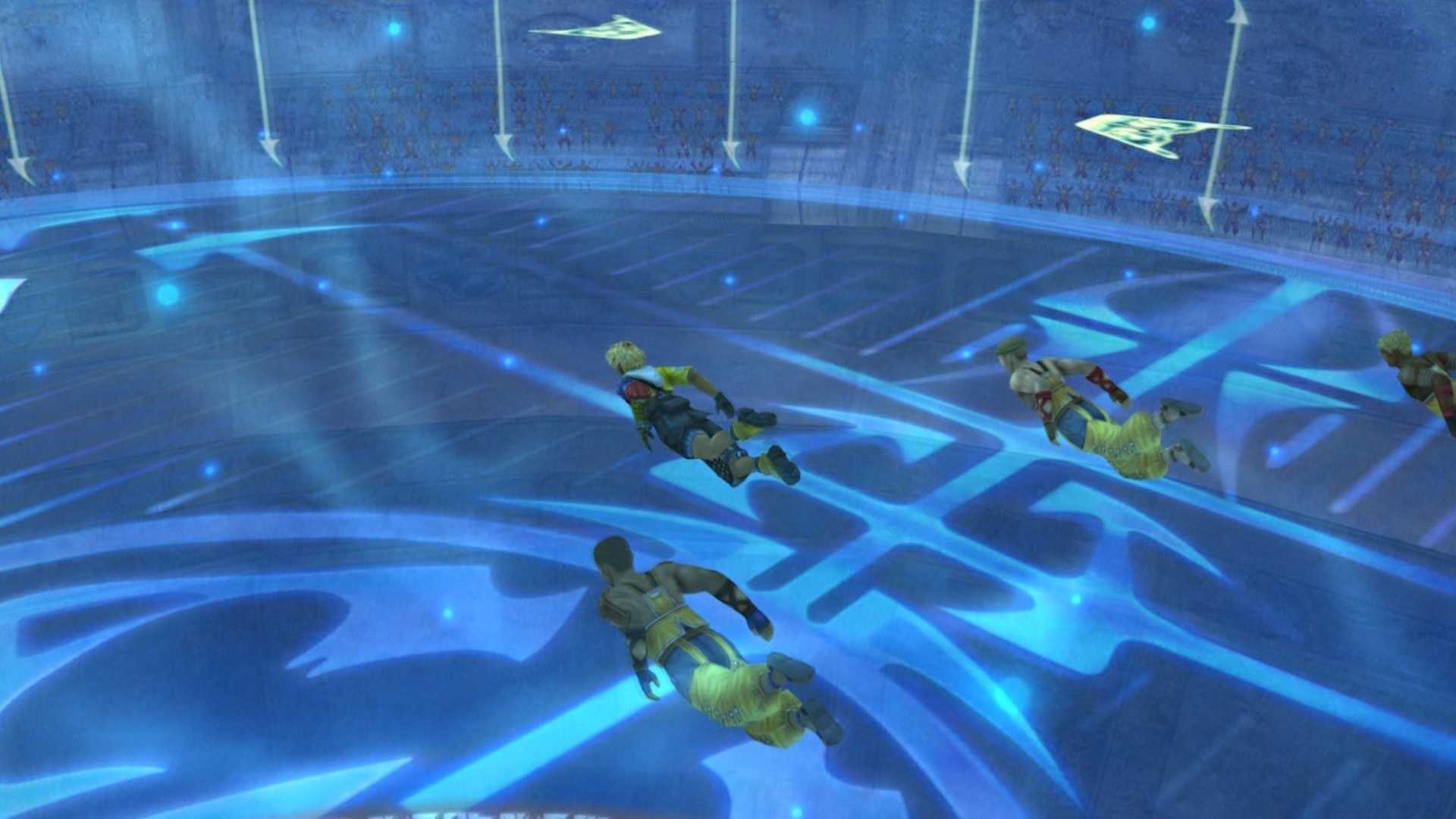 Image via Square Enix
-
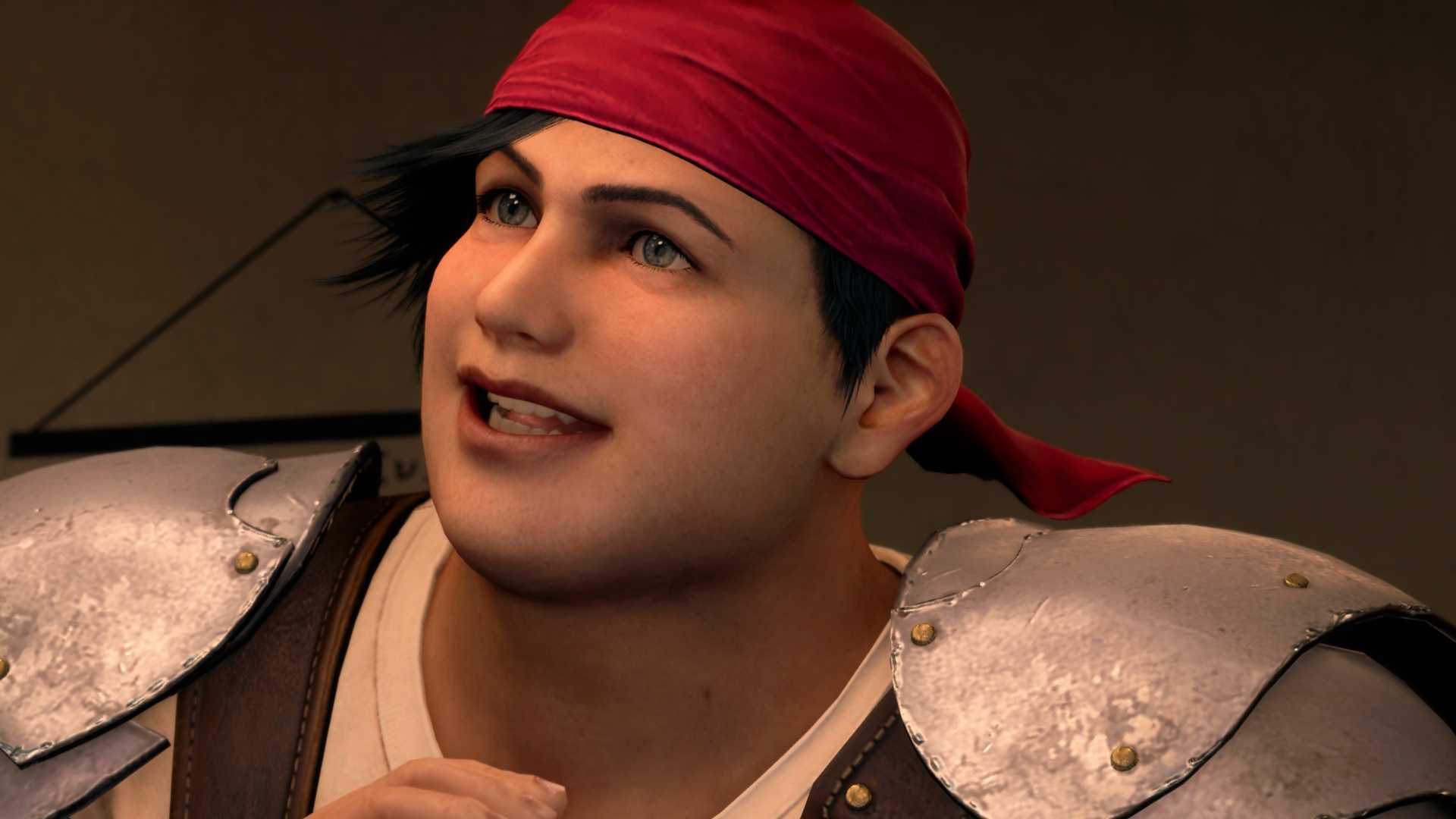 Image via Square Enix
-
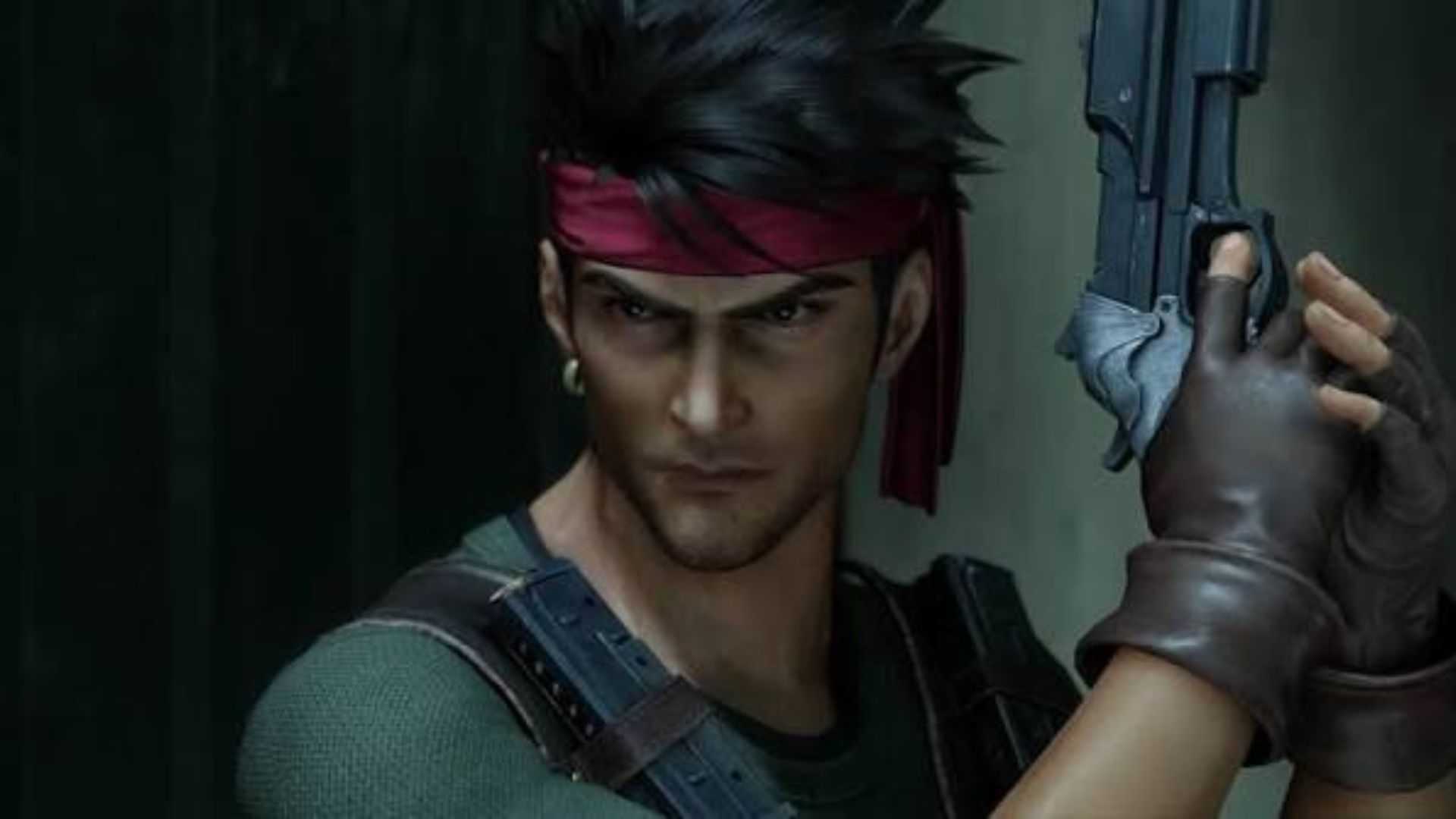 Image via Square Enix
Kitase was clearly influenced by Star Wars, building fictional worlds, incorporating fictional sports, and making fantasy settings feel like places with cultures beyond their central conflicts. The creative was a major fan of Star Wars when he was younger, so it is only right that his love for the massive sci-fi franchise bled into his current work. Final Fantasy as a whole is rife with Star Wars nods because it is, at its core, a fantasy world. Every good fantasy world pays homage to the next, creating what I consider to be a needed cycle of creatives coming together to craft worlds so unlike our own.
Creative Exchange Is the Future of Developing RPGs
-
 Source: Sandfall Interactive
-
 Source: Sandfall Interactive
-
 Source: Sandfall Interactive
This creative exchange is the key to developing RPGs down the line. Interpreting ideas from influential IPs, utilizing them in new games that further the conversation. In the modern age, Clair Obscur: Expedition 33 is living proof that creative exchange works to create a new IP that is just as impactful and unique as the source material. The game was inspired by the classic Final Fantasy entries. Producer and studio co-founder of Sandfall Interactive, François Meurisse, stated that the game director wanted to capture the feel of what modern Final Fantasy games might have felt like if they had continued developing turn-based combat. The 2025 title is evidence that inspiration can produce something distinctly original rather than merely derivative. In his IGN interview, Kitase remarked,
To be honest, I know the game (Clair Obscur: Expedition 33). I spoke with the creators, and I’m actually very happy about the fact that they have been so inspired by Final Fantasy and they created a new game from that. And also, I was inspired by movies and in particular by Star Wars when I was young. So I took inspiration from many things I was interested in when I was younger and I used that inspiration to create my games.
The best way for us as humans to grasp foreign concepts like fantasy worlds is by bouncing ideas off of one another, making educated guesses about galaxies far away from our own and a race of people so distant from the human experience. What would these people from this world sound like? What would they do in their free time? Would they experience war and strife as we do? Exchanging creative info is the best way to fill in those gaps, creating a world beyond our human comprehension. Sometimes, games lay the foundation for other games that might come after, setting the stage for what could possibly come from the medium.
This idea of exchanging ideas is not just designated for RPGs. Games like Stardew Valley, Killer Instinct, Rockband, Shovel Knight, and more were all birthed thanks to the existence of other games, taking and interpreting ideas from these games to create something similar or entirely new. Famously, Hideo Kojima and Konami’s Metal Gear Solid series is based on the 1981 John Carpenter film Escape from New York. Kojima has openly acknowledged that Solid Snake was directly modeled after the film’s main character, Snake Plissken. I am a firm believer that ideas are born from other great ideas. Many of the Final Fantasy games, specifically a few directed by Kitase, are stellar ideas born from Star Wars‘ equally stellar ideas.

I’m Abhishek Sharma, an author at TigerJek.com. I enjoy exploring games, testing different strategies, and turning what I learn into clear, useful guides. My goal is to help players understand the game better and improve without the usual confusion.