Between the Game Boy and Game Boy Color, there were nearly 2,000 games released for Nintendo’s portable consoles in their lifetimes. That’s . . . a lot of video games, more than any one person could ever play. To be fair, a lot of them are probably impossible to even find these days.
As such, it’s no surprise that a bunch of these games have completely vanished. They’re still out there in the literal sense, but very few people talk about them anymore. The good news is that these next games, despite being completely forgotten, were excellent Game Boy games, and they still hold up very well, which is impressive given then technology they’re working with.

Rearrange the covers into the correct US release order.
Rearrange the covers into the correct US release order.
Easy (5)Medium (7)Hard (10)
The Bugs Bunny Crazy Castle
Simplicity At Its Finest
Licensed games were a dime a dozen on the Game Boy. Whether it was Dragon Ball or Batman, you could be almost certain that there was a video game adaptation of your favorite cartoons on Nintendo’s portable system. The fact that there were not one, but four games in the The Bugs Bunny Crazy Castle series speaks to just how widespread this trend was.
All four games have their merits, but we’re going to focus on the first game here because it’s so old-school that it’s truly impressive how well it holds up. The Bugs Bunny Crazy Castle is a puzzle platformer, but you can’t jump. I know, I know, that sounds awful, but it works here because it boils the game down to just being a puzzler. It’s mostly about pattern recognition, although the game’s later levels increase the challenge significantly. There is some light combat here, too, once you find some oversized boxing gloves. It’s wild how engaging The Bugs Bunny Crazy Castle still is, when plenty of more “advanced” Game Boy games no longer hold up.
Ninja Taro
One Of The Oldest Action RPGs
|
Platforms |
Game Boy |
|---|---|
|
Released |
March 8, 1991 (Japan) |
|
Developer |
NMK |
|
Genre |
Action RPG |
Set in feudal Japan rather than a fantasy realm, Ninja Taro shares a lot of DNA with action RPGs, especially The Legend of Zelda, although this is no copycat game. You play a ninja in the service of Nobunaga, cleansing the land of evil one floaty ghost at a time. You travel across a vast, open map, swatting evil beasties with your sword or taking them down from afar with shuriken.
Combat looks and feels a lot like The Legend of Zelda, and the world even operates under similar rules, with certain areas blocked off until you have the right item. The difference here is that, instead of earning the items in dungeons, they’re dropped by enemies, allowing you to stock up (and you’ll need to) on as many items as possible before you wander into a dungeon. You can also upgrade your gear by finding parts around the world, stock up on herbs and potions, and even learn spells that you find as you explore. It’s pretty cool, and just like those old Zelda games, this one still hits as well.
Mole Mania
Hope You Like Digging
Mole Mania does have a bit of a reputation to this day, so it isn’t entirely forgotten. The thing is, this game isn’t remembered for its gameplay, or for its adorable mole hero, Muddy Mole. It’s remembered for its creator. This is a very weird and (in retrospect) out-of-character game created by Nintendo executive and mastermind Shigeru Miyamoto. Honestly, it’s just surprising Muddy Mole has never made it onto a Super Smash Bros. roster.
But I’m here to tell you that Mole Mania can stand on its own as a video game, not just a dalliance by one of the medium’s most prolific creators. Muddy moves from one screen to the next, sliding a big ball around each level and guiding it to an exit to move on. However, Muddy can also dig a hole to help him skirt around obstacles, but holes are permanent, and they can block the ball’s path if you’re not careful with their placement. Mole Mania is a surprisingly thought-provoking puzzler and one of Miyamoto’s most underrated projects. If this wasn’t an inspiration for Mina the Hollower, I’ll eat my shoe.
Not A Remake, Not A Spinoff; Something More
-
 Image via Konami
 -
-
 Image via Konami
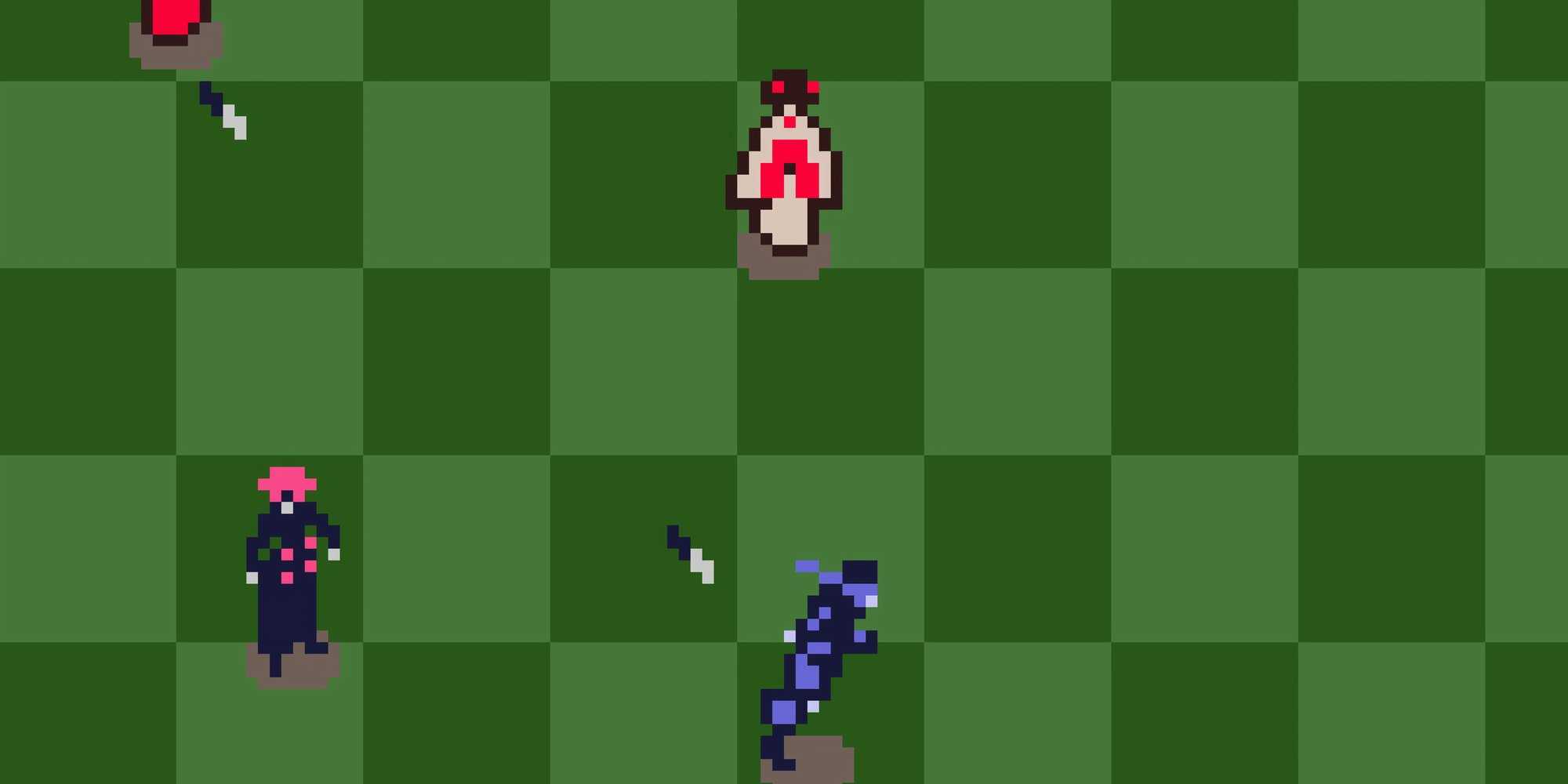
Released in North America and Europe under the simpler title Metal Gear Solid, Metal Gear: Ghost Babel was developed to be a portable version of Metal Gear Solid on the PS2. However, technical limitations and the desire to tell a different story led the game to take some narrative and gameplay swings, enough that it joined the Metal Gear continuity as its own entry, taking place in an alternate timeline following the events of Metal Gear 2: Solid Snake.
While gameplay mostly boils down to traversing each level from point A to point B, the series’ patented stealth is firing on all cylinders here. You have a silenced pistol to take down guards, and a crouch and crawl option to let you hide behind cover. You can even crawl into shallow water or bushes to hide, a mechanic that wouldn’t appear in the mainline games until years later. The story is a little weird; not bad, just kind of adrift with its “not-Metal Gear Solid” approach to a very similar story. That said, this is still Metal Gear across the board, and now that it is officially known as Metal Gear: Ghost Babel in Metal Gear Solid: Master Collection Vol. 2, it can finally hold its own place in the series.
Shantae
Real Ones Know
Few games bear the mantle of cult classic more than Shantae, a 2D platformer on the Game Boy Color that created a long-lasting series that’s still quietly running to this day (the most recent game was released three days before Clair Obscur: Expedition 33). It was originally overlooked because it was a GBC game released at the start of the Game Boy Advance era, and was kind of looked down on as a result. It’s also really hard, although that wasn’t uncommon back in the early 2000s.
Shantae has a number of calling cards. There’s the bright and vibrant art style that pops right off the screen, there’s the unique, hair-based combat, and there’s the awesome shapeshifting abilities. After clearing the first portion of each dungeon, Shantae would rescue a genie that gave her a new form to morph into. She could dash around as a monkey, climb webs as a spider, and even take flight as a hawk. It’s still pretty cool, but it was jaw-dropping back in the day. There are also some awesome (and much more balanced) boss fights to close out each dungeon, marking some of the game’s standout moments.
Ray-Thunder
I Bet This Little Thing Can Run A First-Person Shooter
|
Platforms |
Game Boy |
|---|---|
|
Released |
February 8, 1991 (Japan) |
|
Developer |
Nichibutsu |
|
Genre |
Sci-Fi, First-Person Shooter |
Believe it or not, a studio dared to make a first-person shooter for the Game Boy, although it barely found an audience and was never localized outside of Japan. Ray-Thunder is what happens when you try to get as close as possible to making DOOM for a 1990s portable console. The thing is, it’s fantastic.
Sure, it’s rudimentary as hell, you only have one weapon, and the walls literally only come in one color (white), but there’s undeniable fun to be had here. Movement is bouncy and smooth, and enemies will surprise you by leaping out around corners or charging you down a long hallway. You also have a map to help navigate the same-y passages, but it will show you nearby enemy positions as well, letting you plot a route around them or even set up an ambush. There are traps to avoid, too. Why is there a fighter pilot on the game’s box art? No clue, but Ray-Thunder is an extremely overlooked little gem that only the most entrenched Game Boy fans knew about back in 1991.

I’m Abhishek Sharma, an author at TigerJek.com. I enjoy exploring games, testing different strategies, and turning what I learn into clear, useful guides. My goal is to help players understand the game better and improve without the usual confusion.