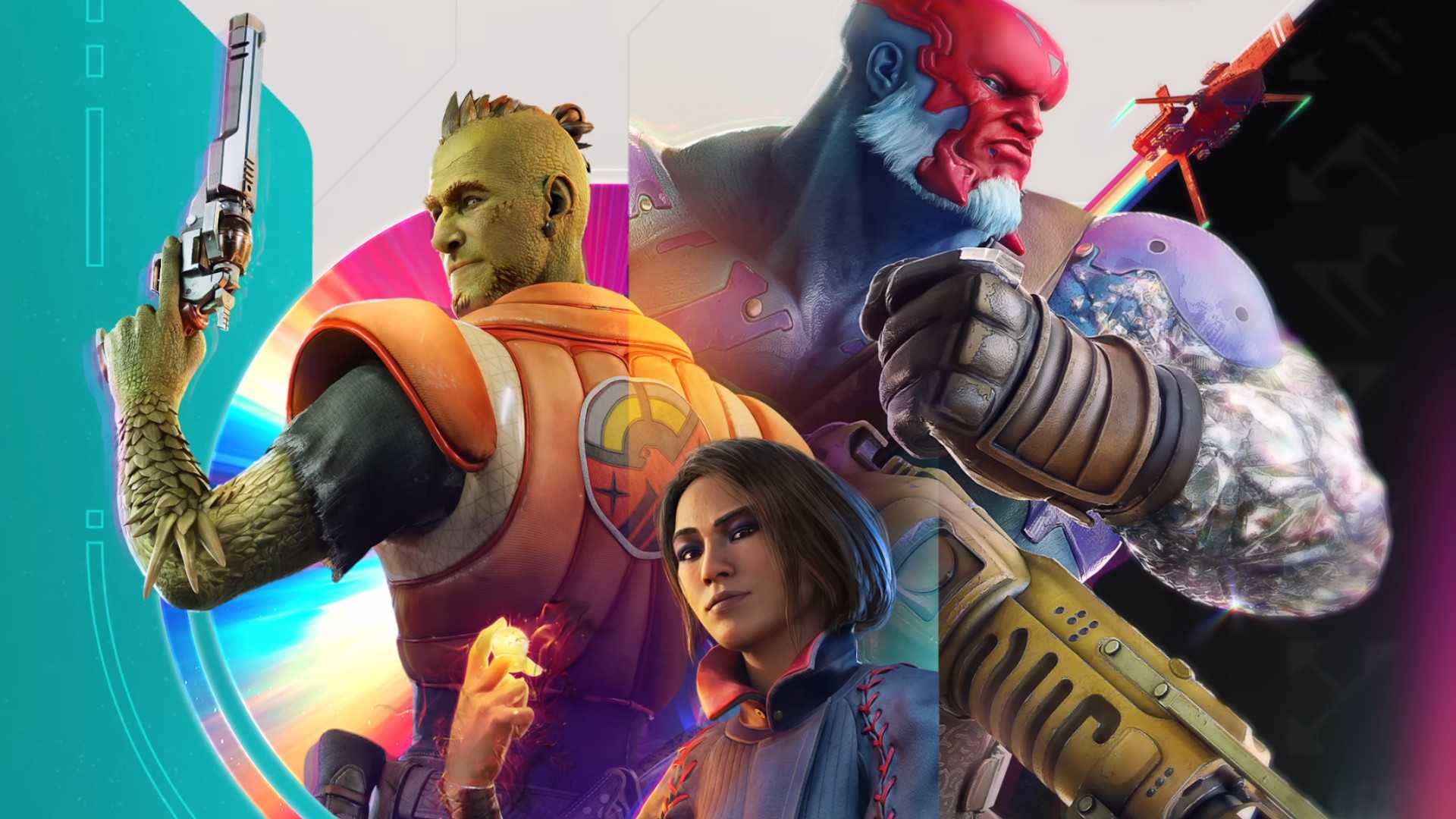
Though the road ahead for Blizzard’s long-dormant sci-fi franchise is still quite long given the 2030 release target, it is no less exciting that StarCraft is officially back. It’s a bold return, too—ditching the series’ staple bird’s-eye RTS view for an open-world FPS, dropping players into the Koprulu Sector a full 70 years after StarCraft 2. But what might take the cake in pure shock value is what StarCraft is already refusing to become: GM and creative director Dan Hay have described it as a boxed, story-driven game with a definitive ending, rather than a seasonal live-service product. It’s almost hard to believe.
I say that only half jokingly, because with the new StarCraft, Blizzard is combining three ingredients that AAA publishers have spent the last decade pounding into the foundations of the live-service genre: a sci-fi setting, first-person gunplay, and—to a lesser extent—a sprawling open world. The industry’s recent history is littered with the corpses of these games; each built from some mix of that recipe and designed to run forever, each, instead, collapsing, and sometimes spectacularly. It’s more than a little refreshing to see Blizzard, one of the industry’s biggest titans, use those same ingredients to build a game that’s a bit more plug-and-play.
The Next StarCraft Ticks All the Live-Service Boxes
For context, the BlizzCon 2026 Opening Ceremony reveal struck me as more than a little worrying, because the only information us outsiders had about StarCraft at that time read like a Sony-esque pitch deck designed for a new recurring revenue stream. Sci-fi settings lend themselves to endlessly expandable universes full of new planets, factions, and gear, after all, and shooters—more generally—provide the moment-to-moment loop that seasonal models rely on to keep players logging in. Finding out it was to be an open-world title was sort of the cherry on top, too, because that format offers the kind of persistent space where events and limited-time or seasonal activities can be layered on ad infinitum.
Blizzard is no stranger to that model either; so much of its recent business runs on ongoing seasons in Overwatch 2 and Diablo 4. The game’s own marketing materials also describe the setting as “a living universe,” phrasing that usually only arrives ahead of a seasonal roadmap. Put together, it was easy to assume Blizzard was preparing another forever game; thankfully, though, Dan Hay came in to clear things up.
Dan Hay Says StarCraft’s Story Has an Ending
Speaking in a BlizzCon interview published by Inven Global alongside senior producer Paul Lee and associate manager of development operations AnaLee Haertling, Hay was asked whether the game was shaping up as a looter shooter, a seasonal title, or something else. His answer framed the project in terms that would have sounded almost old-fashioned a few years ago:
If I were to describe the overall structure we currently envision, it’s a ‘box product.’ It is a narrative-driven open-world shooter where players create a character, name them, and follow that character’s story. The story has a beginning, a middle, and an end. You can roam around and explore a rich open world, but our story has a definitive ending. Think of it as purchasing a standalone boxed game, playing it, and experiencing its story … At the very least, what we are building right now is not a seasonal game.
Just as telling is how Hay describes the open world itself. Rather than positioning it as a space for recurring events or endgame grinding, he compared the structure to a swimming pool sitting a few meters from a hot tub. The tense, story-heavy missions lay on one side; a free-roaming world players can retreat to at their own pace lay on the other.
That’s a meaningful signal coming from Hay, who spent years steering Ubisoft’s Far Cry series before arriving at Blizzard. Far Cry originally built its reputation on open-world sandboxes that existed in service of a campaign, and that philosophy seems to be the foundation here. Hay even admitted that, since he isn’t the most high-speed player himself, he wanted to build a game he can enjoy by wandering, exploring, and stumbling into unexpected turns—that sounds like the polar opposite of a game that expects you to be up-to-date with content season-to-season.
Sci-Fi Shooters Keep Getting Burned by the Forever-Game Model
-
 Image via BioWare
 -
-
 Image via Bungie
This added context from Hay is so welcome, because the graveyard and infirmaries filled with recent sci-fi shooters built for the long haul are not small ones. BioWare’s Anthem was both born and buried in 2019; Sony’s Concord fared even worse, going dark roughly two weeks after its August 2024 launch and prompting PlayStation to close developer Firewalk Studios outright. Even Bungie, the studio that arguably wrote the modern playbook for the sci-fi live-service shooter with Halo, has spent 2026 struggling with its own sci-fi extraction shooter, Marathon.
These are only the most popular examples, of course, and none of these are proof that every live-service sci-fi shooter is doomed to fail, mind you; plenty of players still sink hundreds of happy hours into seasonal games. The problem is that the model asks for an open-ended commitment of time and money in a market where the biggest games already have that attention locked up. Those games also tend to either become unplayable or disappear entirely when they fail, and that’s not really the reality for most boxed releases.
Who’s That Character?

Identify the silhouettes before time runs out.
StarCraft’s Post-Launch Roadmap Might Be Real
It’s worth noting that Hay’s phrasing seems very careful; he stopped short of ruling out post-launch content, confirming only that what’s being built right now isn’t a seasonal game. That’s fair—StarCraft is not due until 2030, and Blizzard has described it as early in development—so there’s a lot of runway for business priorities to shift. Still, a studio lead putting a boxed release and a finite story on record this early is a commitment fans can reasonably hold Blizzard to.
A Boxed Game Model Fits StarCraft Best
The complete-package approach also happens to suit the franchise better than a seasonal model would. Outside its titanic impact on esports, especially overseas, StarCraft‘s reputation has largely rested on its campaigns, from Kerrigan’s abandonment on Tarsonis to the long, messy arc that carried the story across three StarCraft 2 releases. Hay pointed to that moment in the Inven Global interview, saying he wants the new game’s missions to deliver the same kind of emotional punch.
Paul Lee added that recent story-driven games, the likes of Lies of P, Stellar Blade, and Crimson Desert, show that boxed single-player releases can resonate with global audiences. And with a premise set 70 years after Legacy of the Void, StarCraft‘s opening pitch is already promising. That jump in the timeline gives the team room to reshape the Terran, Zerg, and Protoss factions (all three of which are confirmed to play a role) without rewriting what came before.
Ultimately, there’s still a long road before StarCraft reaches players, and the industry has a habit of bending promising single-player projects toward live service somewhere along the way, so there is reason to emphasize the “cautious” in “cautiously optimistic.” For now, though, it’s nice that Blizzard has taken the ingredients most associated with forever games and is choosing to do something different. For my money, it’s the clearest lesson the last few years of sci-fi shooters have offered — and if it holds that line through 2030, StarCraft could end up proving that, like most things, the live-service model is more of a right time, right place sort of thing — not the end-all-be-all some publishers seem to think it is.
I’m Abhishek Sharma, an author at TigerJek.com. I enjoy exploring games, testing different strategies, and turning what I learn into clear, useful guides. My goal is to help players understand the game better and improve without the usual confusion.