Elden Ring is the Soulslike every RPG must be measured against, and most games fall short of that masterpiece. However, side quests are the biggest exception, as FromSoftware’s cryptic scripting collides with the nature of 100+ hour open-world romps. Filled with nonsense boundaries, NPC teleportation with no contextual clues, and easily broken narrative chains, Elden Ring doesn’t make it all that easy to access, let alone enjoy, its side quests; fortunately, these Soulslikes do it better.
While many projects in the genre copy Elden Ring‘s playbook down to a T, a few titles knew better than to replicate FromSoftware’s quest structure, opting insteadfor a system that doesn’t require players to jump through arbitrary hoops. I’m not specifically talking about the quality of the lore or writing, but rather how these games present their side quests.
5
Nioh 2 Gets You To The Good Stuff As Quickly As Possible
The Anti-FromSoftware Approach To Side Quests
- You select Side Missions from the overworld map.
- Side Missions are in self-contained areas and typically last maybe 10–20 minutes.
- They often include great boss battles.
If Elden Ring overcomplicates side quests, then Nioh 2 reduces them to their simplest form. You don’t have to talk to hard-to-find NPCs, collect obscure items, or stroll through this gate at exactly 6:03 PM without leggings to trigger optional quests. Sub-missions appear on your overworld map when you complete their simple-as-heck prerequisite, which often means clearing a main mission, talking to a spirit in the late-game hub, or reaching weapon-proficiency thresholds.
Nioh 3 tries to find a middle ground between Nioh 2‘s sub-missions and Elden Ring‘s side quests, and mostly succeeds. Nioh 2 handles it better, though.
Sub-missions are easy to find and start, and Nioh 2gives you all the information you need to decide whether to tackle a quest right now. They are also great for farming boss skills or trying out a new build, even if I’m personally an Odachi lifer. While the objectives vary from quest to quest, many of them involve dueling bosses in some pretty darn great fights; seriously, you battle Oda Nobunaga, Honda Tadakatsu, and Ninja Gaiden‘s Ryu in sub-missions.
4
The Surge 2 Avoids Elden Ring’s Frustrating Guesswork
You Know What To Do
-
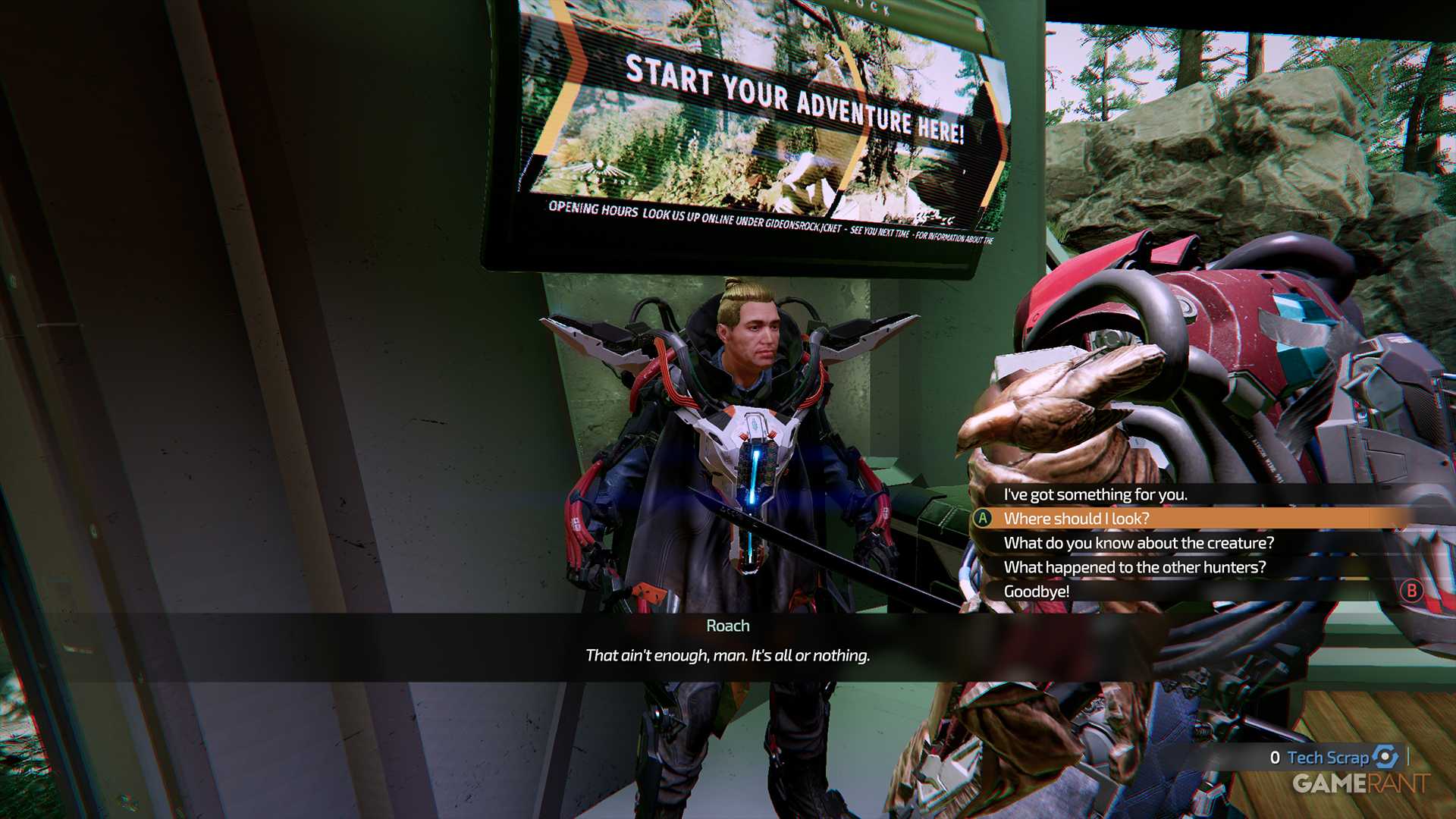 Image by GameRant; Source: Focus Entertainment
 -
 Image by GameRant; Source: Focus Entertainment
 -
 Image by GameRant; Source: Focus Entertainment
- Side quests follow a logical route.
- Your Exo-RIG has a quest log.
One of the genre’s most underrated gems, The Surge 2 is a damn fine sci-fi Soulslike. While Elden Ring‘s world stretches on forever, Deck13’s game takes place in Jericho City, a dystopian metropolis that doesn’t sacrifice logic for size. The map is divided into social hubs where NPCs gather, so you generally know where to go to find specific characters, making it fairly easy to start and finish side quests.
While not completely devoid of complex map design, The Surge 2 generally avoids convoluting side quests for no real reason. If you need to deliver medicine to Dr. Sorensson, you find it in a family care center, a perfectly logical place to find something like that. Most quests work like this, and you log them in a database, making it easy to track your progress. Deck13 also ties the game’s best feature, limb-targeting combat, to many side quests, adding precision that elevates what would otherwise be a “go kill this” storyline.
As a negative, The Surge 2 waits way too long to introduce fast travel.
3
No Rest For The Wicked’s Side Quests Change The World
Soulslike Combat With An Action RPG Mindset
- An active quest journal tracks every conversation.
- Usually, the game tells you the general area to search in.
Elden Ring‘s side-quest presentation is defined by opacity: You need to figure everything out after hearing one cryptic sentence from an NPC who disappears immediately after. Now, I’m not saying this system is worse than open-world games that tell you everything without requiring anything, but both are extreme examples that often lead to dissatisfaction. No Rest for the Wicked tries to find a nice point somewhere in the middle: Side quests are detailed, logged, tracked, but not spoon-fed.
Instead of telling you nothing and wishing you luck, the RPG highlights the general area of the map that contains the targeted ruin, and you have to figure out the route. This style is fairly typical of isometric action RPGs, and NRFTW‘s structure leans more into that genre than traditional Soulslikes. Narrative side quests like “Of Rats and Raiders” include detailed stories, voice acting, unique bosses, and even alter Sacrament’s NPCs, directly impacting the world.
Elden Ring‘s side quests also affect which characters stay inside the Roundtable Hold, but NRFTW‘schanges feel more substantial.
NRFTW‘s bounty board is pretty dull and basic, but it’s mostly there to help players farm XP and resources.
2
Remnant 2 Fixes The Worst Part Of Elden Ring’s Side Quests
Say No To Failure States

- Worlds are randomly generated, so you can’t do everything in a single run.
- You can re-roll worlds until you complete everything you want.
Even though it ranks second, Remnant 2 innovated the most in side quests in Soulslikes. Rather than relying on dialogue chains or endless wandering, Gunfire Games structures its optional quests around puzzles, multi-use items, and Adventure Mode’s re-roll mechanic.
Remnant 2‘s biggest improvement over Elden Ring is eliminating permanent bricking. The latter makes it too easy to trigger a failure state that locks players out of progressing that side quest for the rest of the playthrough, which often means they never get to complete that story. Remnant 2‘s worlds are procedurally generated, combining hand-crafted guaranteed content with randomized elements.
Obviously, this system would be incredibly frustrating if you only got one go at a world per playthrough, but Remnant 2 circumvents this dilemma by introducing Adventure Mode. This mode lets you re-roll a specific world without affecting the main campaign, so you can experiment, replay, and make different choices with no risk. Any loot you gather carries over to the primary campaign.
Remnant 2‘s side quests shine in other areas, but this one system sets it well above Elden Ring.
1
Lies of P Is The Gold Standard For Soulslike Side Quests
Hopefully, New Games Take Lessons From This Soulslike

- Side quests have direct consequences on your playthrough.
- Guides you without telling you too much.
Far and away, Lies of P has the best side quests in the Soulslike genre, both in terms of thematic integration and their presentation. This might sound simple, but Round8’s greatest trick is how its fast-travel menu quietly guides you through quests, without doing all the thinking for you. If an NPC moves or an event triggers, an icon appears next to the fast-travel point in the menu, telling you that something new awaits.
If you pick up a lost wedding ring, you go to the area in Krat with new dialogue, but you still need to find the character yourself. The delivery system is great, but what about the quality of the side quests? Well, Lies of P centers many of them around its Lie System and Humanity. Puppets are designed to never lie, and doing so demonstrates your free will; therefore, you often have to decide whether to end a quest by telling the truth or a fib. Your decisions impact P’s appearance and even the story’s ending.

I’m Abhishek Sharma, an author at TigerJek.com. I enjoy exploring games, testing different strategies, and turning what I learn into clear, useful guides. My goal is to help players understand the game better and improve without the usual confusion.