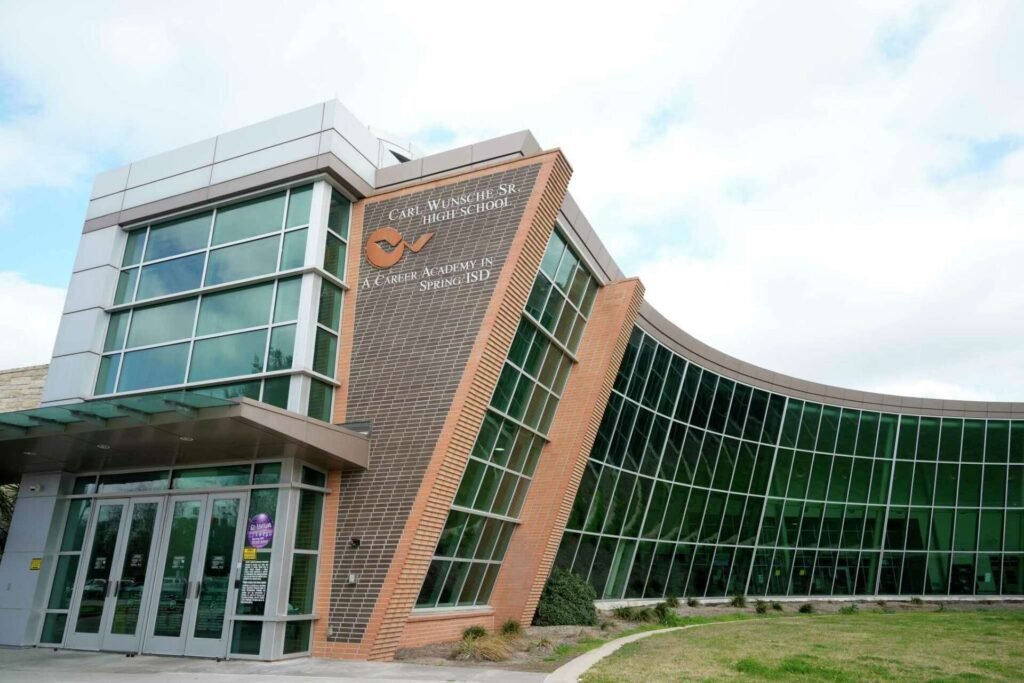
Hellow guys, Welcome to TigerJek, today in this article we will see the list of top 7 best schools in Detroit. Detroit is a city with a long and complicated story. Known as the Motor City and the birthplace of Motown, Detroit has seen decades of growth, decline, and now revitalization. That same narrative plays out in its schools. Parents moving to Detroit or raising children in the city often face a critical question: where can their children get the best education?
While Detroit has faced challenges in its public school system, there are still bright spots—schools that consistently deliver strong academics, innovative programs, and supportive environments. These schools range from large magnet high schools with national reputations to smaller charter academies and K-8 institutions that set the foundation early.
TigerJek has researched and compiled a comprehensive guide to help families understand the best schools in Detroit, what makes each one stand out, and the practical details parents need to know.
Also Read: Best Schools in Kharkiv
Why Choosing the Right School Matters in Detroit
Detroit’s education landscape is unique. The city operates a mixture of:
- Detroit Public Schools Community District (DPSCD): The traditional public school system.
- Charter schools: Publicly funded but independently run.
- Magnet schools: Specialized schools that require applications, auditions, or entrance exams.
- Private schools: Both secular and faith-based options.
Because of this variety, parents have more choice than in many other U.S. cities. But that also means the process can be confusing. Families often ask:
- Should I try for a magnet high school like Cass Tech?
- Are charter schools performing better than traditional public schools?
- Which schools offer the best arts, STEM, or college prep programs?
- What about elementary and middle schools—where are the strongest options?
This article highlights schools that consistently rank well, attract positive attention, and, most importantly, prepare students for their futures.
Best Schools in Detroit
1. Cass Technical High School
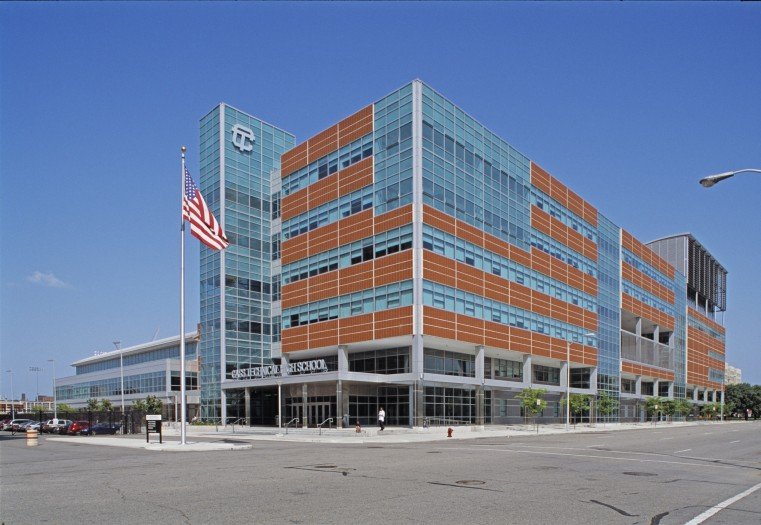
Cass Technical High School (Cass Tech) stands as one of Detroit’s flagship institutions for rigorous public education. Established in 1907, Cass Tech is a four-year public magnet high school in Midtown Detroit, part of the Detroit Public Schools Community District. With an enrollment of approximately 2,485 students for the 2023-24 academic year, and a student-teacher ratio around 25:1, Cass Tech is large, urban, and offers broad opportunity.
Curriculum and Specialization
What sets Cass Tech apart is its requirement that every student selects a specialized “curriculum path” in ninth grade—roughly equivalent to a college major. These pathways include disciplines such as engineering and manufacturing; business, marketing, and finance; human services; arts and communications; and health sciences. The school designs electives and advanced coursework to support these paths: for example, students in Architecture & Design study “Introduction to Engineering Design,” “Architectural Drafting,” and related classes, while those in Business paths get multiple levels of accounting, business law, international business, etc.
Advanced Academic Options
Cass Tech offers a strong AP program (with about nine AP courses regularly available), an International Baccalaureate program, and dual-enrollment partnerships with colleges including Wayne State University, Wayne County Community College District, Lawrence Technological University, and University of Michigan-Dearborn School of Social Work. These options allow students to earn college credit while still in high school, accelerating their readiness and reducing future college burdens.
Academic Outcomes & Performance
Students at Cass Tech perform well above average in many measures for Detroit. The four-year graduation rate is very high—around 98%. On state assessments, reading proficiency sits at about 56%, while math proficiency is around 20%. Average standardized test scores are solid: an SAT average near 1,070, ACT around 23. AP exam pass rates hover at about 36% among those who attempt them, reflecting both the challenge of the work and the demanding standards Cass Tech students face.
Student Experience & Culture
Cass Tech is known for its diversity of student interests, strong alumni connections, and many extracurriculars—arts, athletics, clubs, and social organizations. Students report a vibrant school culture; many say Cass Tech fosters pride, ambition, and a sense of community. A few common criticisms: the large student body means some students feel less individually seen, and there are reports that certain departments (especially advanced math/science) are more demanding.
2. Renaissance High School
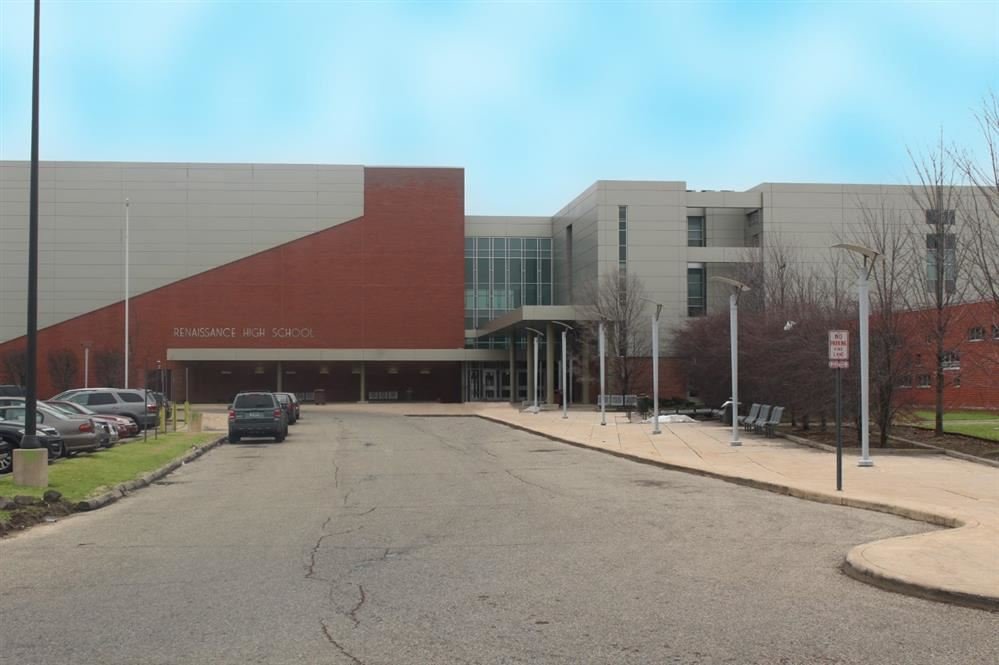
Renaissance High School is a highly regarded public magnet school in Detroit, Michigan, serving grades 9-12. Located at 6565 West Outer Drive in the Greenwich neighborhood, it is part of the Detroit Public Schools Community District. Established in 1978 on the former site of Catholic Central High School, its first class graduated in 1981.
Student Body & Environment
Renaissance enrolls approximately 1,170-1,200 students. The gender balance skews female (about twice as many female students as male). Its student-teacher ratio is about 20:1, slightly higher than Michigan’s state average. The school operates as a Title I school, with a high percentage of students eligible for free or reduced-price lunch—reflecting sizable economic need in the community.
Academics & Outcomes
Renaissance is known for strong college preparatory features. It offers both Advanced Placement (AP) courses and the International Baccalaureate (IB) programme. Students must complete 200 hours of community service and take seven courses per semester (school rotates schedules to accommodate this).
Academic proficiency is mixed: about 65% of students are proficient in reading, while math proficiency is lower, in the range of 23-34% depending on source and year. The graduation rate is high, approximately 95%, placing the school among the top 20-30% of Michigan high schools in that metric.
Strengths & Challenges
Strengths:
- Rigorous academic offerings (AP, IB, strong electives) and a culture of high expectations.
- High graduation rate; many students go on to colleges and universities.
- Strong reading/language arts performance relative to many Detroit schools.
Challenges:
- Lower math proficiency is an area that needs improvement.
- The selective admission process makes it competitive to get in.
- Larger class sizes and student body (relative to some smaller magnets) mean students may need strong self-initiative to stand out.
Renaissance High School remains one of Detroit’s premier choices for families prioritizing academic rigor and college readiness. Its history, demanding curriculum, and strong outcomes make it a compelling option—but prospective students and parents should be mindful of the challenges, particularly in math and competition for admission.
Also Read: Best Schools in Istanbul
3. Detroit School of Arts (DSA)
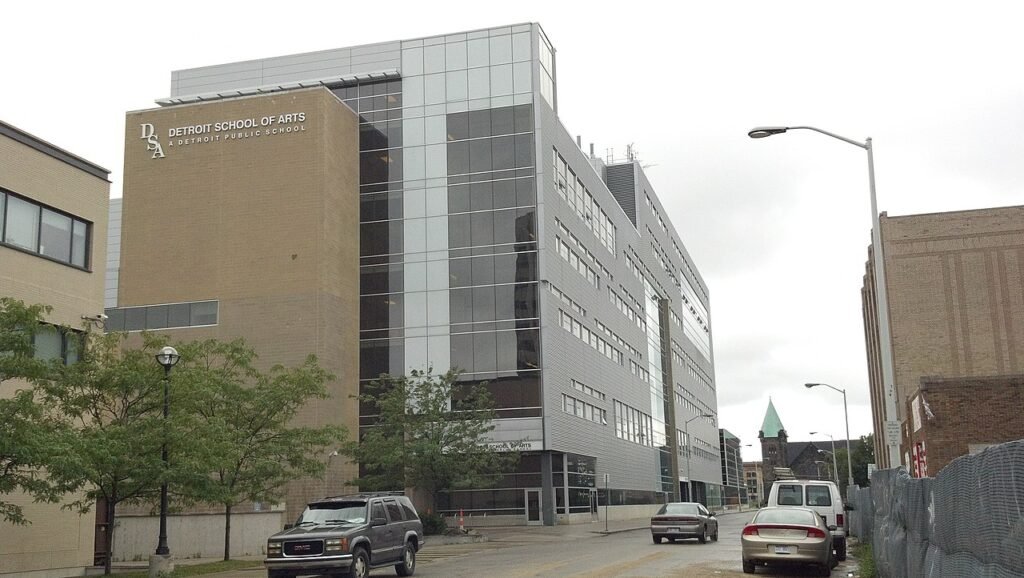
Detroit School of Arts (DSA) is a public magnet high school located at 123 Selden Street in Midtown Detroit. It serves grades 9 through 12, with an enrollment of about 430-470 students and a student-teacher ratio near 13-1, significantly lower than many comparable Michigan schools. The school draws students from across Detroit who have demonstrated artistic potential, through auditions, portfolios, or similar talent evaluations.
Academics & Performance
DSA offers a core academic curriculum together with intensive arts training. Students take required academic courses alongside specialized instruction in dance, theatre, instrumental music, visual arts, and choral music. Advanced Placement (AP) courses are available, although participation is modest: about 24% of students take at least one AP exam. However, the rate of passing an AP exam is lower, reflecting both the challenge of the coursework and the need for additional academic supports.
In terms of state testing, DSA’s proficiency rates show strong performance in reading compared to many Detroit schools, but math proficiency is very low—often in the single digits. Graduation rate stands at around 90-94%, placing it among the higher-performing schools in Michigan in that metric.
Strengths, Challenges & Culture
Strengths:
- The low student-teacher ratio helps DSA offer more individualized attention, especially in arts disciplines.
- It has strong reputation and facilities, and gives students in Detroit serious arts tracks they might not find elsewhere.
- The school’s culture tends to reward dedication, creativity, discipline—especially in performing arts.
Challenges:
- Math proficiency is a weak spot; many students and families report that academic support is necessary beyond what the school curriculum offers.
- Participation and pass rates in AP exams remain modest; coursework can be demanding.
- Since it’s competitive to get in (audition/portfolio), not every student who applies is accepted.
Overall, for students whose passions lie in the arts, Detroit School of Arts delivers an environment where creativity is central rather than peripheral. While academic metrics, especially in math, lag behind top academic magnets, DSA’s strengths lie in its ability to blend creative training with foundational academics. Families should weigh both sides—if artistic interest is strong, DSA is an excellent choice, and supplementing academic support can make the difference.
4. Communication and Media Arts High School (CMA)
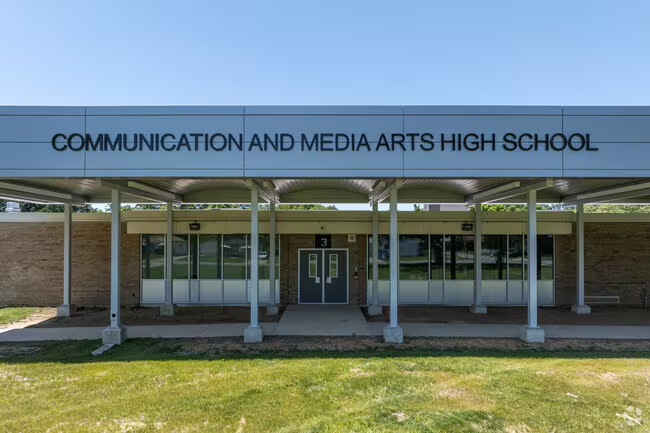
Communication & Media Arts High School (CMAHS) is a public magnet high school located in Detroit, Michigan, part of the Detroit Public Schools Community District. Serving grades 9 through 12, it has about 300 to 310 students as of the 2023-24 academic year and a student-teacher ratio of roughly 17:1.
Academic Programs & Opportunities
CMAHS aims to blend college preparation with hands-on media learning. It offers advanced/honors classes and some Advanced Placement (AP) options, although the number of students taking AP exams is modest. There are also dual-enrollment opportunities so students can earn college credits while still in high school. For students drawn to creative fields, CMAHS provides real experience in communication, media arts, broadcasting, podcasting, and journalism. Partnership programs like Winning Futures and similar mentoring efforts add to student support and enrichment.
Performance & Outcomes
While completion of the high school program is strong—with a graduation rate around 90-92%—CMAHS faces challenges in state testing performance. Proficiency in math is very low (about 5%) and reading proficiency is also well below the Michigan average (~12%) in recent assessments. Chronic absenteeism has also been flagged as a concern.
Strengths & Culture
- Smaller, more intimate environment compared to larger magnet schools, which allows slightly more personalized attention.
- Focused creative and media arts programming gives students rare opportunities to work with relevant media tools and produce work (podcasts, multimedia projects, etc.).
- Supportive extracurricular and mentorship programs help offset gaps in standardized testing performance.
Challenges & What Families Should Know
CMAHS’s low proficiency in core subjects, especially math, means students may need additional academic support outside school. The smaller size and narrower course offerings can also limit options—if a student wants a broad array of electives or advanced STEM tracks, CMAHS may have fewer choices than larger schools.
In sum, Communication & Media Arts High School is best for students who are strongly interested in media, communications, and creative work and are okay with investing effort in their academics, especially math. TigerJek sees CMAHS as a school that shines in its specialized niche: giving creative-minded students a platform, while also pushing them toward graduation and post-secondary readiness, even if standardized test scores lag behind some peers.
Also Read:Best Schools in Kyiv
5. Jalen Rose Leadership Academy
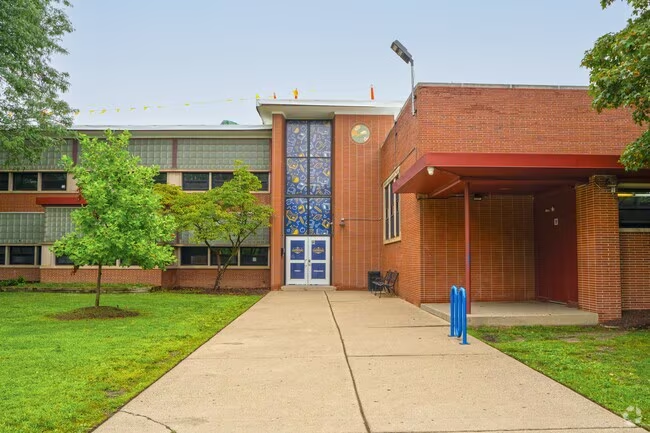
Jalen Rose Leadership Academy (JRLA) is a public charter high school in northwest Detroit, founded in 2011 by former NBA player and Detroit native Jalen Rose. JRLA serves grades 9-12, with around 400-420 students enrolled. It is tuition-free and open enrollment.
Mission, Culture & Leadership
JRLA’s mission is built on cultivating character, leadership, and strong academic preparation. Its motto—“Enter a Learner, Exit a Leader”—captures the aim to not just help students graduate, but to equip them with the skills, discipline, and resilience needed for college and beyond. The school follows a “9-16” model: it supports scholars through high school and continues tracking post-high school outcomes via its Postsecondary Success team.
Academic Performance & Outcomes
JRLA has a graduation rate in the mid-90s percentage range—around 95-96% —which is strong. Also, about 69% of graduates matriculate to college within a year of finishing high school, slightly above or on par with the Michigan state average.
However, JRLA faces challenges, especially in proficiency on state testing. Math proficiency is very low—often 5% or less, significantly below state averages. Reading proficiency is better but still trailing: many sources show reading rates in the 15-20% range among students meeting state benchmarks. The student-teacher ratio is reported to be fairly high—around 25-30:1 in some reports—higher than smaller magnet schools in Detroit.
Strengths & What Families Should Know
Strengths:
- JRLA places strong emphasis on leadership development, character, and a college-going culture. Students get exposure to college through campus visits, workshops, and personalized support in choosing and applying to post-secondary institutions.
- The school has many alumni and boasts 100% college or post-secondary acceptance for its senior classes. Graduates are supported even after high school, which is unusual in many schools.
Challenges:
- Low proficiency in core subject state tests, especially for math, remains a concern. Families may need to supplement instruction or seek tutoring.
- High student-teacher ratios mean less individual class time per student compared to smaller magnet schools.
- Because it’s a charter school, resources may be more constrained, especially in terms of facilities or class choice, than at some larger public magnet schools.
Overall Assessment
For families who prioritize character, leadership, and college readiness, JRLA offers a compelling option. While its academic scores in some areas lag, its graduation performance, college matriculation, and focus on postsecondary support are strong. TigerJek considers JRLA a school with real potential—especially if students are ready to work hard, lean on the supports offered, and maybe supplement where needed.
6. Detroit Edison Public School Academy (DEPSA)
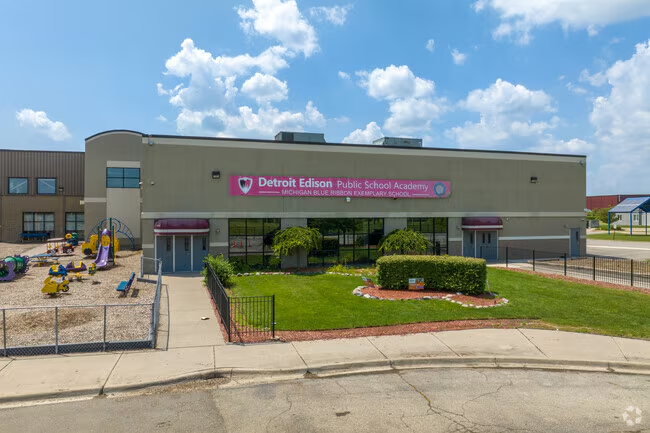
Detroit Edison Public School Academy (DEPSA) is a charter school network in Detroit offering Pre-K through grade 12, under the New Paradigm for Education nonprofit charter management organization. DEPSA seeks to combine academic basics with enrichment, character development, and community involvement.
Enrollment, Demographics & Setting
DEPSA serves roughly 1,237 students district-wide across its two campuses (PK-8 and 9-12) as of the 2024-25 school year. The student body is almost entirely minority, with over 95-99% of students being Black. The student-teacher ratio averages about 19:1 across the district, though that hides some variation depending on grade level. Many students qualify for free or reduced-price lunch (i.e. many come from low-income households).
Academic Programs & Mission
DEPSA emphasizes a holistic approach. Its official mission includes preparing students to be “compassionate and caring global citizens and successful lifelong learners.” The curriculum includes an International Baccalaureate (IB) Middle Years Programme for middle grades, a middle school honors track (including early exposure to high school subjects like algebra), after-school enrichment, sports, and tutoring support.
DEPSA also invests in character building, family/community partnerships, and supports for the whole child (not just academics).
Performance, Strengths & Challenges
Strengths:
- High Graduation Rate: The high school wing has a graduation rate often cited at ≈95%, well above many peers in Detroit.
- Stability & Continuity: For families seeking a single institution from early childhood through senior year, DEPSA offers that path (PK-12), which can help with continuity in expectations and culture.
- Supportive Enrichment: The school’s offering of extracurriculars, honors tracks, and intervention supports (like tutoring) help supplement core academics.
Challenges:
- Academic Proficiency Gaps: DEPSA’s students lag behind state averages in standardized testing. For example, reading proficiency is around 35-39% in the high school, and math proficiency is very low—≤5-8% in many recent years.
- Chronic Absenteeism: Data shows a worrying rise in chronic absenteeism, especially in the higher grades, which may undercut performance gains.
- Resource Constraints: As is common among charter schools, DEPSA operates under tighter financial constraints than large district magnets; this can limit classroom resources, teacher salary competitiveness, or breadth of elective options.
Overall Assessment
For families who want a K-12 option in Detroit with strong graduation outcomes and an emphasis on both character and academic support, DEPSA is an attractive choice. It holds particular appeal when continuity from early grades through high school matters. But TigerJek cautions that academic metrics (especially in math) show clear room for improvement, and parents should consider:
- Supplementary learning support (tutoring, after-school, etc.)
- Monitoring attendance closely, since absenteeism appears to correlate with lower achievement
- Visiting the school, talking to current students/families, to understand how the school supports students who struggle in state exams.
Also Read: Best Schools in Bucharest
7. Bates Academy
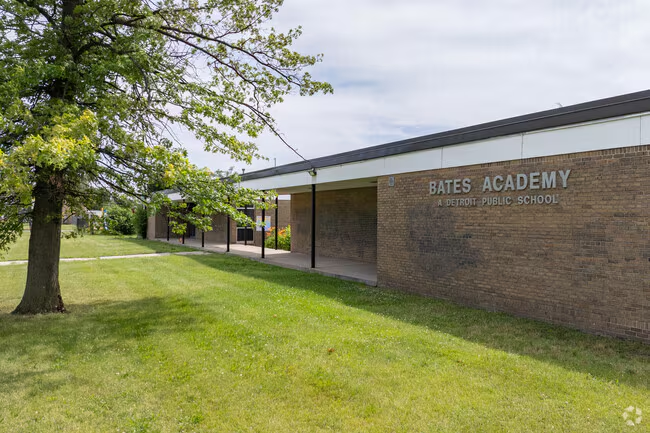
Bates Academy is an exam-school magnet public school in Detroit, serving Pre-Kindergarten through 8th grade (PK-8), known for its strong culture of academic excellence. It is part of the Detroit Public Schools Community District and draws students who qualify via an entrance test.
Enrollment & Demographics
The school enrolls roughly 755 to 785 students across its PK-8 levels. The student-teacher ratio is about 19:1, which is a bit higher than some ideal targets but standard in many Detroit schools. The student body is overwhelmingly Black / African-American (nearly 100%), reflecting the demographics of the district.
Academic Performance & Outcomes
Bates Academy consistently outperforms many other Detroit schools—and often the district average—in state testing. About 42% of its students reach proficiency in math, compared to Michigan’s state average in the low 30s, and 56% in reading / language arts, which is also higher than the state average. Science proficiency is lower, around 35-39%, but still above many peer schools in Detroit.
Bates is ranked highly within Detroit schools: for example, U.S. News ranks it #1 among Detroit Public Schools Community District elementary schools, and similarly top-among middle schools in the district.
Strengths & Culture
- As an examination (gifted / talented) school, Bates Academy offers enriched curriculum, including acceleration in math and reading for students who demonstrate readiness.
- Students and parents report strong teacher commitment and community support. Reviews highlight caring faculty, a culture of high expectations, and good preparation for future schooling.
- The school regularly earns praise in district-wide academic competitions and is frequently cited for its strong performance in science and math among Detroit K-8s.
Challenges & What Families Should Know
- Entrance is selective. Not every child qualifies, so families need to plan ahead for exams and application windows.
- The student-teacher ratio (≈ 19:1) is higher than ideal; while instruction is strong, some students may desire more individualized attention.
- While reading proficiency is strong, math and science still have room for improvement relative to the very top performing K-8 schools statewide.
How to Choose the Right School in Detroit
With so many options, choosing the right school comes down to understanding your child’s needs.
- Academic Strength vs. Specialization: If your child excels academically, Cass Tech or Renaissance may be the best fit. If they’re passionate about arts or media, DSA or CMA could be perfect.
- School Size: Large schools like Cass Tech offer more opportunities but can feel impersonal. Smaller schools may provide more attention.
- Charter vs. Public: Charters like DEPSA and Jalen Rose Leadership Academy provide alternatives to DPSCD, often with strong results.
- Commute and Logistics: Detroit schools can vary widely in location; consider the daily travel time.
- Application Process: Many of the best schools are selective—be prepared for entrance exams, auditions, or lotteries.
FAQs for Parents
Q: Are Detroit schools free?
Yes, public and charter schools in Detroit are tuition-free. Private schools, however, charge tuition.
Q: How do I apply to magnet schools like Cass Tech or Renaissance?
Families must complete an application and students often take entrance exams. Deadlines typically fall in late winter or early spring.
Q: What about safety?
Safety varies by neighborhood and school. Larger schools have security staff, and many charters emphasize safe environments. Visiting the school in person can help parents assess this.
Q: Are Detroit schools diverse?
Most schools in Detroit primarily serve African-American students. Charter and magnet schools may have slightly more diversity.
Q: How do Detroit schools rank compared to suburban schools?
Suburban districts often have higher test scores and more resources. However, Detroit’s top magnet and charter schools compete strongly with suburban counterparts.
Final Thoughts
Detroit’s education system has its challenges, but families willing to navigate the system can find excellent opportunities. Schools like Cass Technical High School and Renaissance High School consistently deliver strong academic outcomes. Specialized schools like the Detroit School of Arts and Communication & Media Arts provide unique pathways for creative students. Charters such as Detroit Edison PSA and Jalen Rose Leadership Academy offer supportive alternatives, while Bates Academy sets the foundation for younger learners.
TigerJek’s advice is simple: match the school to your child’s needs, be proactive with applications, and visit schools personally whenever possible. With careful planning, Detroit offers plenty of options for a quality education.

Hi, I’m Haider Ali, author and co-founder of TigerJek.com. I’ve been deep into Roblox and mobile games for years, and I personally test every strategy, build, and method I cover. I like taking complicated mechanics and turning them into clear, simple guidance that helps players improve faster and enjoy the game more.